English
 русский
 Français
 Español
 Deutsch
How Auto Folder Gluer Machines Revolutionize Packaging Production
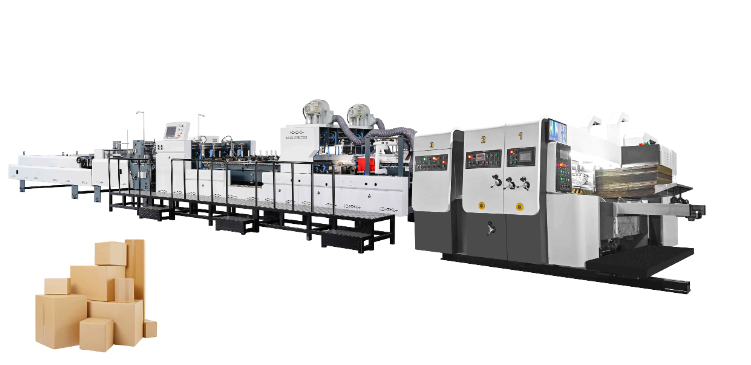
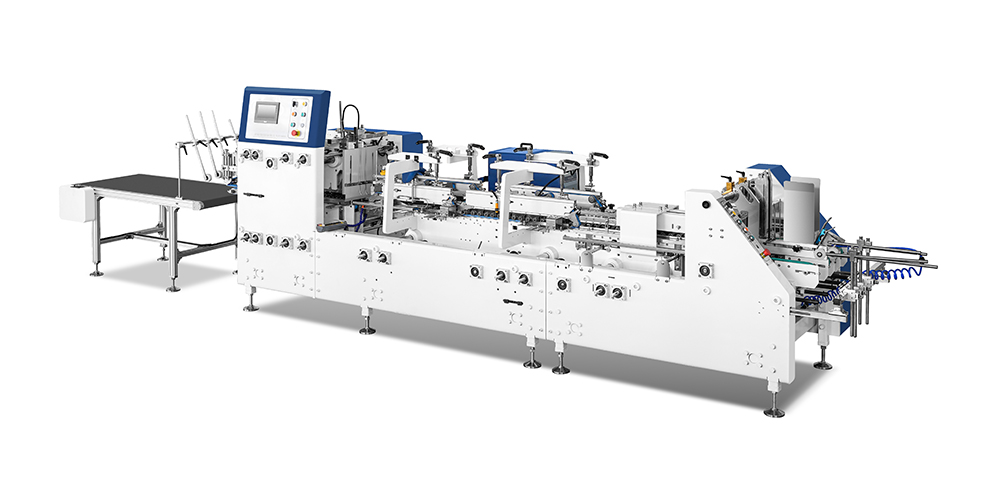
Walk into a modern packaging plant today. The scene is completely different from before. Workers bending over long tables to fold boxes are gone. Tall automated machines stand in their place. These are Auto Folder Gluer Machines. They work with a steady, continuous rhythm. Flat sheets of board enter at one end. Minutes later, perfectly formed boxes stack neatly at the output. This change is more than machines replacing hands. It changes the basic logic of packaging production. A box used to depend on a worker's hands and eyes. Now it comes from precise servo motors, computer programs, and sensor networks.
The change in production efficiency is the most obvious. The limits of manual gluing are clear. A skilled worker might complete 500 to 800 standard boxes in an eight-hour shift. That is the maximum under intense labor. A medium-sized Auto Folder Gluer Machine can produce 2,000 to 5,000 boxes per hour. This is dozens of times faster than manual work. But this is more than just added speed. The machine's real change is its continuity and stability. It does not need breaks. It does not get tired. It can run for 24 hours without stopping. For factories facing large e-commerce orders, this ability is not an "improvement." It is a fundamental change from impossible to possible. It gives factories the confidence to accept sudden, large orders. This completely changes a company's ability to take orders and respond to the market.
The efficiency revolution goes beyond speed. A deeper change is the compression of the production process. Traditional production is scattered. Die-cut boards must be moved to the gluing area. After workers fold a batch, they might wait for glue to dry before sorting and packing. Each step has material delays and handling waste. The Auto Folder Gluer Machine combines these separate steps into a continuous flow. The board enters from the feeding table. It goes through pre-folding, gluing, forming, pressing, and counting output. The entire process finishes on one production line. This combination removes waiting and handling between steps. It shortens the production cycle from "days" to "hours." It greatly reduces work-in-progress inventory and speeds up capital turnover.
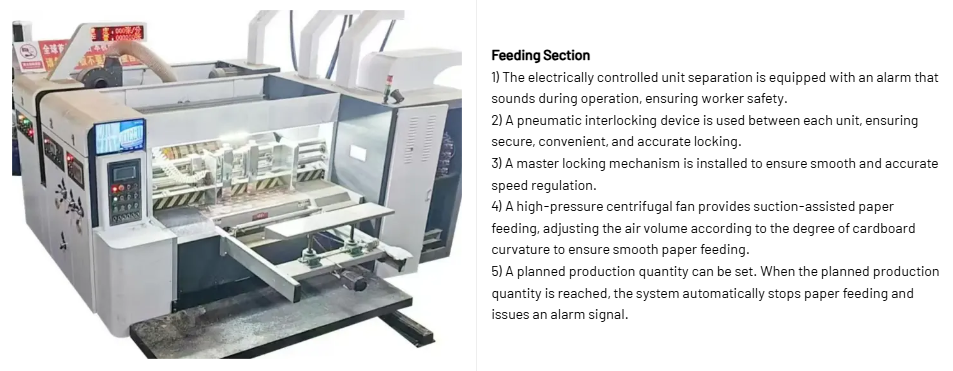
If efficiency is a leap in quantity, then quality consistency is a revolution in quality. Manual production quality relates directly to the worker's condition. Boxes folded in the afternoon when tired may show visible differences from those made in the morning. Standards are hard to keep the same between different workers. This inconsistency is fatal for high-end retail packaging. Luxury packaging requires every box to have the exact same opening feel and corner sharpness.
The Auto Folder Gluer Machine solves this with precise digital control. Each folding action is driven by servo motors with a repeat positioning accuracy of ±0.1mm. Each glue line is controlled by a CNC glue valve, with glue amount error below 3%. This means whether it is the first box or the ten-thousandth, their dimensions, angles, and bond strength stay highly consistent. This consistency does more than improve product quality. It builds brand trust. When retailers know every shipment is identical, their inspection process and inventory management become simpler and more efficient.
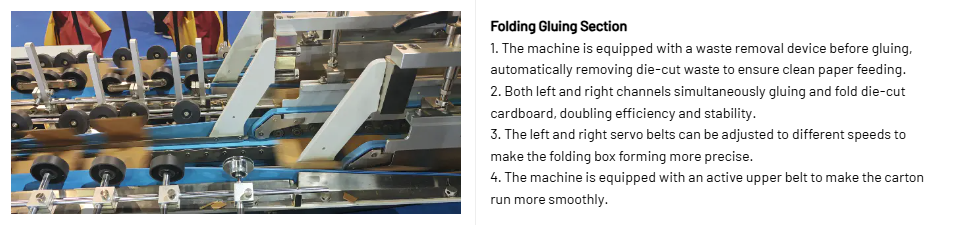
The quality revolution also shows in seeing and tracking the production process. Modern Auto Folder Gluer Machines have rich sensor networks. Photoelectric sensors watch board positioning. Pressure sensors make sure folding is correct. Temperature sensors control glue activity. This data shows in real time on the touchscreen. The operator can always see the production status. More importantly, production data can be recorded and stored. If a batch of boxes has problems at the client's site, the factory can find that day's production data. They can check if all parameters were within set ranges. This move from "checking results" to "preventing problems" is the center of modern quality management.
Changes in production methods must reshape the human resource structure. Traditional gluing workshops mainly needed operators who could perform repetitive actions quickly and accurately. On automated production lines, the most important position is the technician who can set up, maintain, and improve the machine. This change places new demands on both workers and companies.
Workers need new skill sets. Basic mechanical principles, electrical knowledge, computer operation skills, and data analysis awareness become key. Work moves from physical labor to mental labor. It shifts from performing fixed actions to solving complex problems. This is both a challenge and an opportunity. Technical positions usually mean higher pay and more sustainable career paths.
For companies, the logic of human resource management changes. The manpower needed per unit of output drops significantly. But the value created by each employee increases notably. Companies must build new training systems to help workers transition their skills. They must design new pay and promotion paths to keep valuable technical talent. This shift from "many people" to "skilled people" is a crucial upgrade for the industry's human capital.
At the same time, automation changes the nature of the work environment. The loud noise and physical strain of manual workshops decrease. The workspace becomes cleaner and more organized. This helps attract a new generation of workers who value a better working environment. It also lowers job injury rates and related costs. For companies, investing in automation is also an investment in their social responsibility and employer brand.
The fourth revolution is production flexibility. Today's market is scattered and fast-changing. A factory might need to produce large shipping boxes in the morning and small, elegant gift boxes in the afternoon. Changing old equipment settings could take hours or require changing physical molds. This meant small-batch orders were often not profitable.
Computer-controlled Auto Folder Gluer Machines change this logic. To switch to a different box design, the operator simply calls up a different program on the screen. Servo motors automatically adjust the positions of folding arms, glue heads, and conveyors. Advanced machines can store hundreds of different box designs. Switching between common designs may take just minutes. This makes small-batch, customized production economically workable.
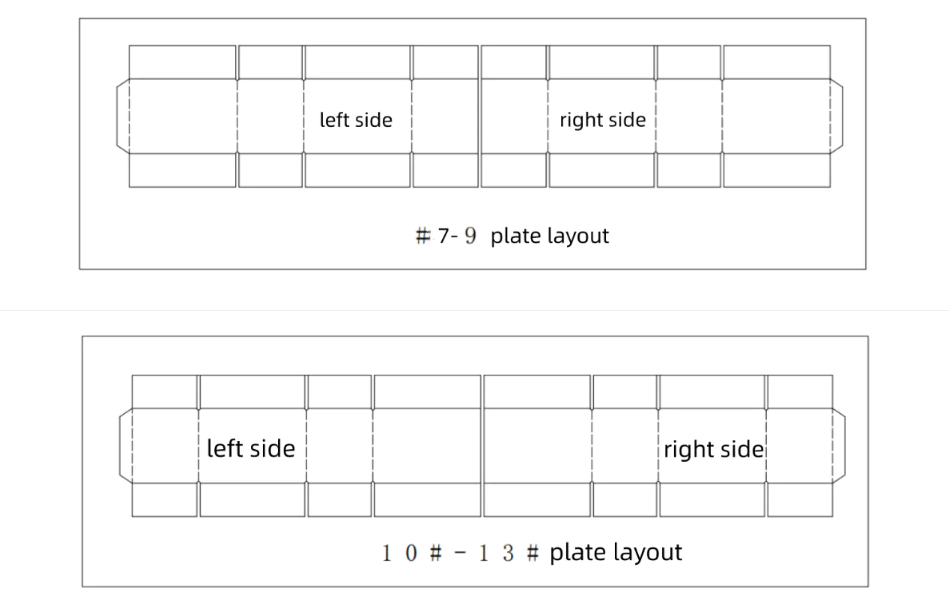
This flexibility connects perfectly with another trend: digital printing. Digital printers can easily print variable data and designs in small batches. The Auto Folder Gluer Machine is the ideal partner in this workflow. It can take these printed sheets and automatically fold and glue them into finished boxes. This enables true on-demand, personalized packaging. For example, a brand can order 200 unique gift boxes for a VIP event, each with a different name or number. The combination of digital printing and automated finishing opens completely new business models and markets.
Finally, this technical revolution connects strongly to sustainable development. The precision of the Auto Folder Gluer Machine itself is a form of green production. By nearly eliminating errors and defective products, it greatly reduces raw material waste. Modern machines use efficient glue application systems that minimize adhesive use while keeping bonds strong. This reduces both material use and potential chemical pollution.
These machines can also reliably process recycled cardboard with high recycled content. They help packaging manufacturers meet increasingly strict environmental rules and consumer demand for sustainable products. Some advanced models also have energy-saving designs, like shutting down motors during idle periods. In an industry often criticized for its environmental impact, the Auto Folder Gluer Machine offers a practical technical path toward greener production.
Efficiency, quality, workforce, flexibility, and sustainability—each of these changes is important on its own. Working together, they represent a complete reinvention of packaging production. The Auto Folder Gluer Machine is not just a faster tool for old jobs. It is the core technology enabling the packaging industry's move from labor-intensive craft to technology-driven modern manufacturing.
At Cenwan, we build this vision of transformation through technology into our daily work. We do not just make machines. We provide reliable solutions for the future of packaging production. Every Auto Folder Gluer Machine carries this responsibility. We focus on delivering stable, dependable performance. Our engineering ensures production consistency. Our control systems make complex operations straightforward. We build durable equipment that becomes a long-term partner in our clients' growth.
We understand that your business success depends on reliable equipment under pressure. It needs to adapt quickly to new challenges. It must operate with steady efficiency. This understanding drives our continuous research and thoughtful innovation. We work to provide the robust, intelligent machinery packaging producers need to compete and lead in their markets. Work with Cenwan. Let us build the next chapter of your production story together, one precisely folded box at a time.
Recommended Products
Focus on providing high-quality folder-gluing equipment to customers around the world.



No.3888, Jiangnan Avenue, Nanbin Street, Ruian City, Wenzhou City, Zhejiang Province, China







Privacy Policy Copyright © Zhejiang Chengwang Intelligent Packaging Equipment Co., Ltd.
High Speed Folder Gluer Factory