English
 русский
 Français
 Español
 Deutsch
Die Cutting vs Digital Cutting: Key Differences Explained with Examples
Cutting is one of the most important steps in the packaging process. Before any carton reaches a corrugated box folder gluer machine or a automatic folding carton cardboard box gluing machine, it must be cut into the right shape. The quality of this cut affects folding accuracy, gluing strength and the final appearance of the box.
Many people hear the terms die cutting and digital cutting and wonder if they are the same. They are not. Both methods have unique strengths, costs and ideal use cases. In this guide, we will explain the die cutting vs digital cutting difference in simple language. We will walk through speed, accuracy, cost, flexibility and sustainability. You will also see real world examples that make the comparisons clear.
Summary of Key Differences
Here is a simple review.
- Die cutting is fast for mass production.
- Digital cutting is flexible for custom and short run orders.
- Die cutting has higher tooling costs.
- Digital cutting has minimal waste.
- Both methods support the workflow of machines like a automatic cardboard box folding machine and a automatic folding carton cardboard box gluing machine.
Understanding these differences helps packaging teams plan smarter production strategies.
1. What Is Die Cutting
Die cutting is a traditional method used in printing and packaging for decades. It uses a metal die shaped according to the dieline creation of the box. This die is usually made from steel and has sharp blades that match the outline of the carton.
There are two common die cutting methods.
Flatbed die cutting
A flatbed die presses down on the material, cutting it like a stamp.
Rotary die cutting
A rotary die is mounted on a cylinder and cuts the carton as the sheet passes through.
Die cutting offers strong cutting accuracy and fast speeds in large batches. It is ideal for mass production because once the die is made, the machine can run thousands of sheets without stopping. This is why many factories feeding into a automatic cardboard box folding machine use die cutting for high volume orders.
2. What Is Digital Cutting
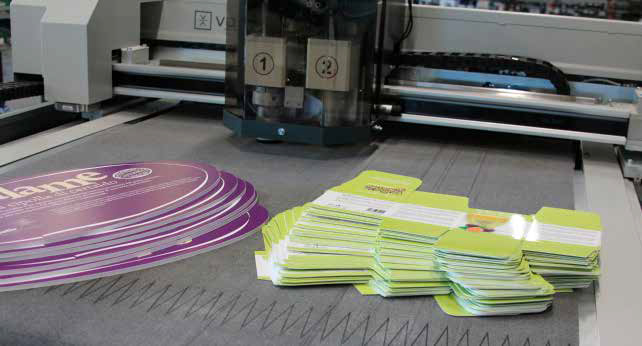
Digital cutting is a newer and more flexible method. Instead of using a metal die, the machine cuts cartons using blades, lasers or routing tools controlled by software. Think of it as computer directed cutting.
Digital cutting depends on CNC cutting technology and digital finishing systems. There is no tooling cost because no metal die is required. You can upload a design and start cutting within minutes.
Digital cutting is perfect for:
- Short runs
- Customized shapes
- Rapid prototypes
- Small batches
- Frequent design changes
It also produces less waste because the cutting path is optimized by the software. This makes digital cutting a smart choice for companies focusing on sustainability.
3. Die Cutting vs Digital Cutting: Key Differences
Here is a simple comparison table that shows the main differences.
Comparison Between Die Cutting and Digital Cutting
| Factor | Die Cutting | Digital Cutting |
| Cost | Higher because of die making | No tooling cost |
| Speed | Very fast for large runs | Slower for bulk production |
| Accuracy | High and consistent | Extremely high for detailed shapes |
| Waste | More waste due to die layout | Less waste due to smart cutting |
| Setup Time | Long setup for die production | Very short setup |
| Best Use Cases | Large orders of cartons | Prototypes, small runs and custom boxes |
This table gives a quick overview, but each factor plays a major role in production planning.
4. Cutting Accuracy, Tooling Cost and Speed Differences
Let us break down the three biggest factors when choosing between die and digital cutting.
Cutting Accuracy
Die cutting has strong accuracy in long runs because the die produces consistent shapes. Digital cutting is even more precise for detailed or complex cuts because the blade or laser follows a computer path with minimal variation.
Tooling Cost
Die cutting requires a physical die which can be expensive, especially for complex designs. Digital cutting does not require any die at all. This is why companies save money when they switch to digital cutting for short runs or frequent design changes.
Speed Differences
Die cutting is best for bulk production. When you need tens of thousands of cartons, die cutting is faster. Digital cutting is slower for large orders but much faster for small and medium runs because you avoid the setup time.
5. Production Flexibility and Finishing Technology
Digital cutting offers strong production flexibility because it does not rely on fixed dies. This means design changes can happen instantly. Packaging designers can make adjustments and start cutting right away.
Digital cutting also pairs well with finishing technology like creasing, scoring and perforation tools. These features help prepare the carton for the folding stage that follows on a high quality automatic folder gluer machine.
Die cutting is less flexible because each change requires a new die. However, it remains the best choice for massive production volumes where speed and repeatability matter most.
6. Real World Examples: Which Method Should You Use
Here are simple examples to help you choose the right cutting method.
Example One. Short Run Custom Boxes
A small business wants 300 custom printed boxes.
Digital cutting is the smart choice. There is no tooling cost and the setup is fast.
Example Two. Mass Production Cartons
A cereal company needs 50,000 cereal boxes.
Die cutting is better because it runs faster and the die cost is spread across a large quantity.
Example Three. Prototypes for Client Approval
A designer wants to test four variations of a new box.
Digital cutting is ideal because designs can be changed instantly.
These examples show how digital and traditional methods support a factory before cartons reach a folder gluing machines supplier system for folding and gluing.
7. Sustainability Angle: Which Method Is More Eco Friendly
Digital cutting is more sustainable than die cutting for several reasons.
Lower material waste
Digital cutting uses optimized cutting paths which reduce offcuts.
No die manufacturing
Creating metal dies uses energy and resources. Digital cutting avoids this step completely.
Less storage
Dies require storage space and eventually disposal. Digital cutting needs only digital files.
Die cutting can still be sustainable when producing large orders because producing one die for thousands of boxes is efficient. But digital cutting remains the cleaner option for smaller runs.
8. Choosing the Best Cutting Method for Carton Production
Choosing between die cutting and digital cutting depends on your goals.
Choose die cutting if you need
- Large volumes
- Very fast production
- Consistent shapes
- Long term repeat orders
Choose digital cutting if you need
- Custom shapes
- Frequent design changes
- Small or medium batches
- Lower waste
- Faster turnaround
Both methods play important roles in modern packaging lines. The right choice ensures clean cutting before cartons enter folding and gluing stages.
Conclusion
Both die cutting and digital cutting have important roles in modern packaging. Die cutting delivers speed and consistency for mass production. Digital cutting provides flexibility, accuracy and lower waste for small or customized orders. When cartons are cut cleanly and efficiently, they move smoothly into machines like a corrugated box folder gluer machine and complete the finishing process with strong precision. Cenwan supports companies in building reliable packaging lines that connect cutting methods to folding and gluing operations. With the right system in place, your workflow becomes smoother and your production becomes more efficient. Cenwan also helps teams understand how upstream cutting choices affect downstream folding speed and gluing performance.
To explore finishing and folding solutions that match your cutting workflow, visit Cenwan and upgrade your packaging line with confidence.
Frequently Asked Questions
1. What is the main difference between die cutting and digital cutting
The main die cutting vs digital cutting difference is that die cutting uses a metal die to cut cartons, while digital cutting uses computer controlled blades or lasers and does not require any tooling.
2. Which method is better for short run custom packaging
Digital cutting is better for short runs because there is no tooling cost and setup is fast. It is ideal for prototypes and small custom orders.
3. Why is die cutting faster for large orders
Die cutting is faster in bulk production because once the die is made, the machine can run thousands of sheets quickly with consistent cutting accuracy.
4. Does digital cutting reduce material waste
Yes. Digital cutting uses optimized cutting paths which create less waste. It supports sustainability goals in carton production.
5. What is a flatbed die in traditional cutting
A flatbed die is a metal plate with blades that presses down on the material to cut carton shapes. It is commonly used for straight line cartons.
6. What is digital finishing in packaging
Digital finishing refers to cutting, scoring and creasing performed by computer guided tools. It works well with prototypes and customized cartons.
7. Which method works best before using a folder gluer
Both methods work well, but digital cutting is preferred for complex shapes. Clean cuts help cartons move smoothly into a corrugated box folder gluer machine during final finishing.
8. What is the biggest cost difference between the two methods
Die cutting requires a physical die, which adds cost and time. Digital cutting has no die cost, making it more affordable for small or changing orders.
9. Is digital cutting suitable for mass production
Digital cutting can handle medium runs but is usually slower than traditional die cutting for very large quantities. Die cutting remains the better choice for mass output.
10. Which method should I choose for carton production
Choose digital cutting for flexibility and small batches. Choose die cutting for high speed and large orders. Both methods prepare sheets that later run through equipment like a automatic folding carton cardboard box gluing machine for final finishing.
Recommended Products
Focus on providing high-quality folder-gluing equipment to customers around the world.



No.3888, Jiangnan Avenue, Nanbin Street, Ruian City, Wenzhou City, Zhejiang Province, China







Privacy Policy Copyright © Zhejiang Chengwang Intelligent Packaging Equipment Co., Ltd.
High Speed Folder Gluer Factory