English
 русский
 Français
 Español
 Deutsch
5 Must-Ask Questions Before You Buy an Automatic Box Folder
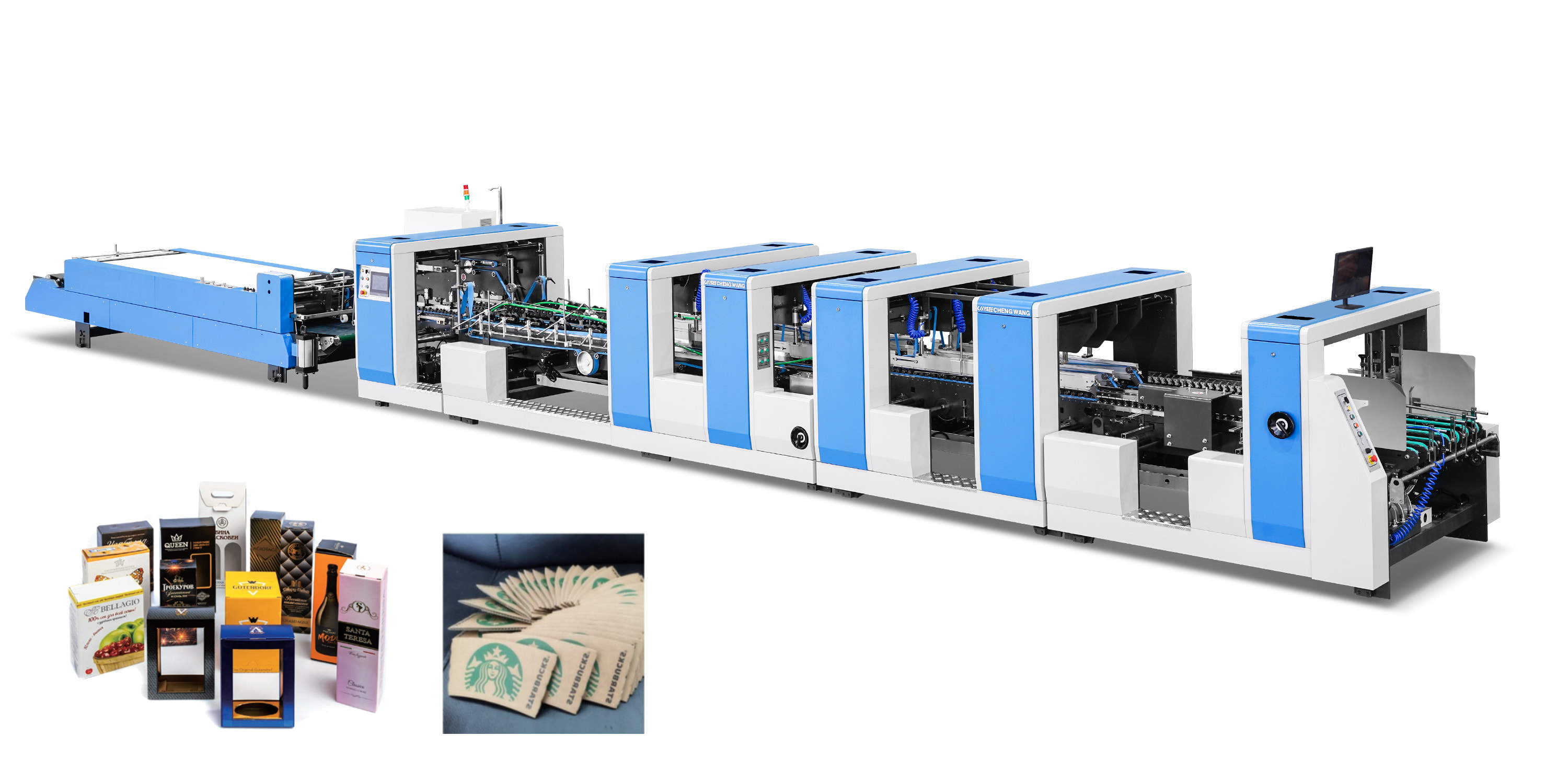
Picture this: a packaging factory buys a new machine. The salesperson promises it will work perfectly. The machine arrives, but then problems start. The machine cannot handle their thinnest cardboard. It jams often. The promised speed of 12,000 boxes per hour is never reached. In reality, it struggles to make 7,000. Then, a critical part breaks. The factory waits two weeks for a spare part to arrive from another country. The production line stops. The manager is frustrated. This is an expensive lesson.
Buying an Automatic Box Folder is a big investment. But the buyer and the seller do not have the same information. Sellers show you the best features. They use smooth sales talk. The possible problems, the limits, and the real performance are often hidden behind general promises.
You must change the process. Do not just listen to the sales presentation. You must ask tough questions. This is not about being difficult. This is about seeing the truth. You need to know about long-term reliability. You need to know if the machine fits your real production. You need to know about the supplier's real service strength.
This article gives you five powerful questions. These questions help you see past the marketing. They help you compare suppliers. They help you find out who is selling a real industrial solution, and who is just selling a machine.
Question 1: "How does your machine handle my thinnest and thickest cardboard?"
This question tests the machine's real working range. It is the first step to avoid buying a machine that does not fit your materials.
Why is this question important? Cardboard comes in different weights and thicknesses. It has different stiffness. A machine that works well with thick, stiff board might struggle with thin, floppy board. The "working range" in the brochure is often a theory. The machine might work fine in the middle of that range. But at the edges, it might fail.
Do not accept a simple "yes" as an answer. You must do two things.
First, give the supplier your own cardboard samples. Choose two types. Pick the most challenging ones you use. For example, send your thinnest E-flute corrugated board and your thickest, heaviest cardstock.
Second, ask for a video test. Tell the supplier to run your samples on their machine. They must run the full process, from feeding the sheet to making the finished box. They should make a clear video of this test. Watch the video carefully. See if the sheets feed smoothly. Check if the folds are accurate. Look for any crushing or scratching on the board.
Also, ask how the machine adjusts for different thicknesses. Do workers need to change mechanical parts? Or can they adjust it from the control screen using servo motors?
A good supplier will say "yes" to your test right away. They will provide a clear video quickly. They will explain what settings they changed for your material. A bad supplier will make excuses. They might say the machine is not available. They might use a similar, but different, material for the demo. They might only show a short, perfect clip. This is a warning sign.
Question 2: "How does your alignment system work? How much does the accuracy drift during 8 hours of continuous production?"
This question goes to the heart of the machine. You want to know how it keeps its precision over time. Precision decides how many boxes are good. It also decides if the boxes will work with your downstream automated packers.
There are two main types of alignment systems. The basic system uses simple sensors and air cylinders to push the sheet straight. It is cheaper. But it is slower and less accurate (often more than 1mm error). Dust and paper scraps can confuse it.
The better system uses servo motors for alignment. It uses encoders and a fast computer (PLC) to control everything. This system is very accurate. It can hold a precision of 0.5mm or even better. It is stable and reliable.
You need specific information. Ask the supplier to explain their system. A simple drawing is helpful. Ask about the accuracy number. Do not just accept "±0.5mm". Ask if this is from a single test, or from data collected over a full 8-hour shift. Long-term stability is what matters. Also ask about maintenance. How often does the system need calibration? What daily care does it need?
A good supplier can explain their servo alignment logic clearly. They will show you the brands of key parts, like the servo motors. They might even provide a test report. A bad supplier will give vague answers. They will just say "our machine is very accurate." They cannot explain how the machine keeps its precision all day. This is a problem.
Question 3: "When running my main box style, what is the sustainable, trouble-free production speed? What is the changeover time?"
This question breaks the "maximum speed" myth. You do not care about the top speed under perfect conditions. You care about the real, average speed in your factory, including all the small stops.
The "maximum speed" in the brochure is a trap. It is measured with perfect cardboard, one box style, and a brand-new machine. It does not reflect your daily reality.
Focus on three real efficiency numbers.
- Sustainable Speed: For your specific box, how many good boxes can the machine make per hour, consistently? This number should include normal small pauses.
- Reliability: How long can the machine run without a major stop? What is its designed or typical runtime between issues?
- Changeover Time: This is critical if you make different boxes. How long does it take to switch from Box Style A to Box Style B? What parts need to be changed? How many people are needed? Get a time estimate in minutes.
How can you check this? Ask the supplier for a long video. Ask for a video of their machine running for 30 minutes straight, making one box style. Count the boxes it makes in that time. Also, ask if they have a current customer who makes a similar box. Can that customer share their production log? Real data from a real factory is the best proof.
Question 4: "What is the control principle of your gluing system? How do you minimize glue waste and ensure a clean finish?"
This question is about your running cost and product quality. Glue is a big ongoing expense. How the machine applies it affects your cost and how your boxes look.
There are common systems. The traditional wheel system runs a glue wheel in a tank. It is simple but can be messy. Glue amount can vary. It can create strings and splatters. Cleaning it to change glue type takes time and wastes glue.
A better system is the precision spray or dot system. It uses a pump to shoot tiny dots or a fine line of glue. The amount is controlled very precisely by a computer.
This system has big advantages. It can save 20% to 40% on glue because there is almost no waste. There are no glue strings, so boxes are clean. Changing from one glue to another is fast. You only clean a small nozzle.
Ask for details. How does the system ensure every box gets the same amount of glue? How long does it take to clean the whole glue path? Can it work with the glue you use now, like hot melt or PVA?
Ask for a demonstration. A video showing the glue starting, stopping, and the cleaning process is very useful. Do a simple calculation. Estimate your annual glue use. See how much money the precision system could save you each year. Include this saving when you think about the machine's price.
Question 5: "When the machine has a critical failure – the one I worry about most – what is your response and solution process?"
This question moves the talk from buying a product to buying long-term security and service. You are testing the supplier's emergency plan and service culture.
Create a specific bad situation. For example: "The main PLC computer fails at night. The line cannot start in the morning." Or, "The main drive servo motor makes a strange noise and needs replacement."
You need clear promises.
- Response Time: How fast will your technical support answer the phone? 2 hours or 24 hours? If we need a technician on site, how soon will they come? 24 hours, 48 hours, or more?
- Spare Parts: Do you keep critical electrical and mechanical parts in local stock? If not, what is the standard delivery time for parts from Europe or Japan?
- Remote Help: Can your technicians connect to the machine remotely for diagnosis? How is this done securely? Can you guide our staff before your technician arrives?
- Training and Documentation: Will you give us complete, easy-to-understand manuals? Electrical drawings, air system diagrams, maintenance guides? Is the training for our staff a quick overview or a deep, systematic course?
How do you judge the answer? Ask to see their standard service agreement. Ask for a real example of how they handled a similar problem for another customer. Listen carefully. Do they sound confident and transparent? Or nervous and vague?
Asking these five questions is your right. It is also the smart thing to do. These questions are like a powerful spotlight. They show the true engineering quality under the machine's shiny box. They show if a supplier wants a quick sale or a long-term partnership.
At Cenwan, we welcome these questions. We are not afraid of them. We know that a partnership built on this kind of honest inspection is strong and lasting. As a professional Automatic Box Folder manufacturer, we have detailed, fact-based answers for every one of these questions. Our answers come from engineering, not from sales brochures.
We invite you to do this test. Bring these five questions to us. Bring your most difficult cardboard samples to our technical center. Let us show you. We will run your materials. We will show you real data. We will give you concrete solutions. Choosing Cenwan means choosing predictable performance, controllable risk, and a service partner you can trust for the long term.
Are you ready to take control of your next machine purchase? Use this list of questions. Contact the Cenwan team. Let us start a real technical conversation. The best partnerships start with the hardest questions and the most honest answers. We are ready for yours.
Recommended Products
Focus on providing high-quality folder-gluing equipment to customers around the world.



No.3888, Jiangnan Avenue, Nanbin Street, Ruian City, Wenzhou City, Zhejiang Province, China







Privacy Policy Copyright © Zhejiang Chengwang Intelligent Packaging Equipment Co., Ltd.
High Speed Folder Gluer Factory