How Can Automatic Folder Gluer Support Continuous Packaging Production
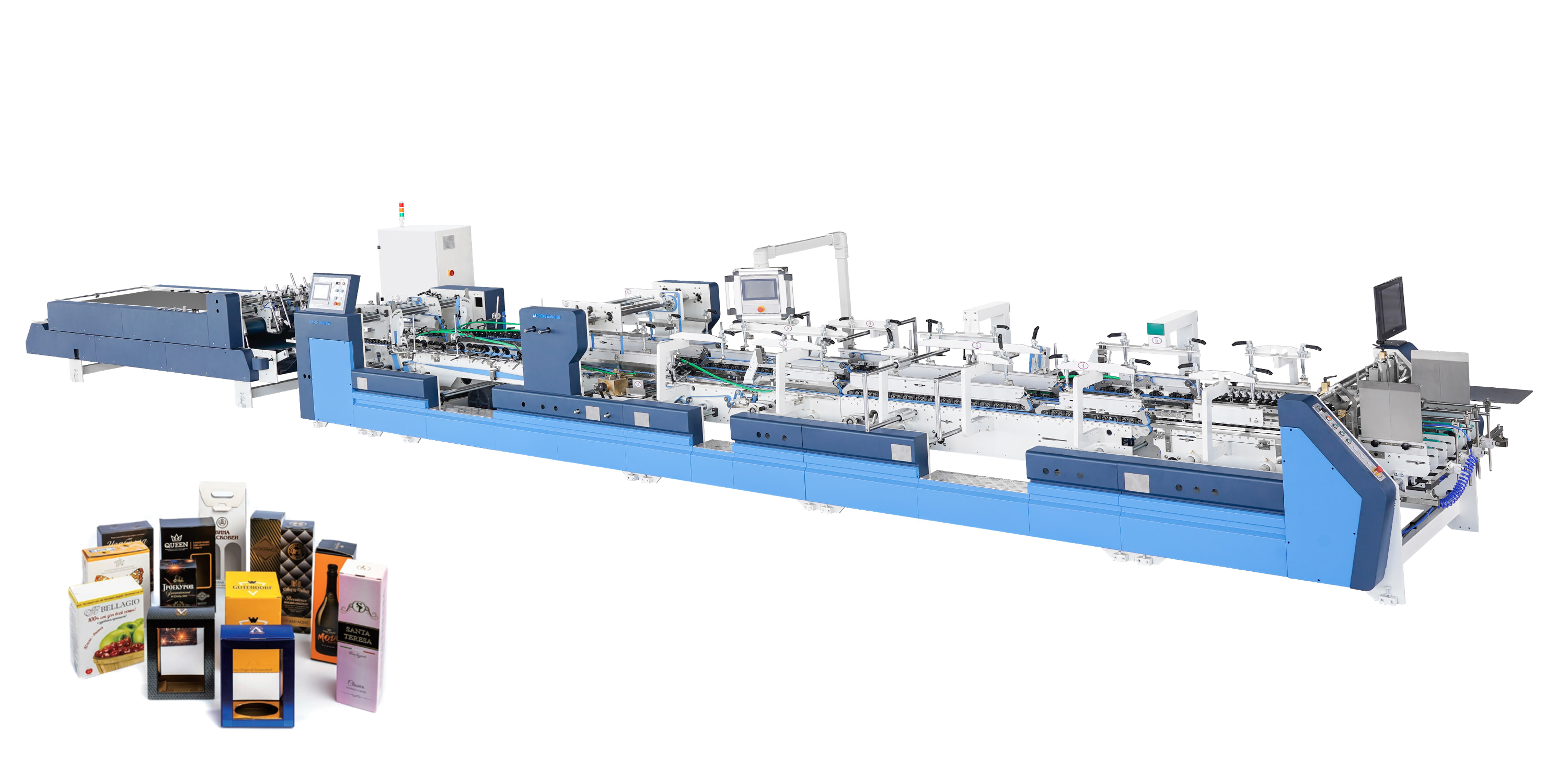
What Does Continuous Packaging Production Depend On in Folding and Gluing Systems?
Continuous packaging lines only look smooth from a distance. In real operation, everything depends on how steadily material keeps moving through each small step without breaking rhythm.
An Automatic Folder Gluer is expected to keep sheets flowing from feeding into folding, then into gluing, then out again in one direction. No real pause in between. Once something in that chain becomes uneven, even slightly, the effect usually shows up later in alignment or bonding feel.
Sometimes it is not obvious at the start. A sheet may enter a little off-center, or pressure may feel slightly different from one side to another. Nothing stops, yet the output slowly loses that clean consistency.
Most operators notice one simple truth over time: stability is less about speed and more about whether each stage quietly matches the next one.
How Does Automatic Folder Gluer Maintain Stable Material Flow?
Inside the machine, material never really "travels" as one single motion. It moves step by step, guided through feeding rollers, alignment points, folding sections, and glue application zones.
Each transition matters more than people usually expect. If feeding brings sheets in too close or too far apart, folding does not break, though alignment starts to shift slightly. The machine keeps going, correcting through mechanical contact rather than stopping anything.
Pressure is always present along the folding path. It holds the sheet against guides so movement does not drift too freely. When pressure feels uneven, material can slide just enough to change how edges line up later.
In daily work, stable flow usually comes down to a few quiet conditions:
- feeding stays steady without irregular gaps
- pressure stays balanced across folding channels
- sheet transfer feels smooth between sections
- contact between rollers and material remains consistent
- folding resistance does not jump suddenly
Folder Gluer Equipment is built around this kind of steady motion rather than isolated adjustments in one area.
Why Is Material Consistency Important in Continuous Operation?
Even when the machine stays unchanged, material never behaves exactly the same every time. That is where most variation begins.
Thickness is usually the first thing noticed. Slightly thicker sheets feel more resistant during folding. Thinner sheets move faster, sometimes almost too easily, and that can lead to small shifts during transfer.
Fiber direction also changes how folding behaves. When folding follows the natural direction of fibers, movement feels smoother. When it goes against it, resistance appears, sometimes only visible after repeated cycles.
Surface condition changes glue interaction as well. Smooth or coated surfaces let material slide more easily, while rougher surfaces grip better but may slow down movement slightly.
In real production, variation often shows up like this:
- folding line shifts a little between batches
- glue reacts faster on some sheets, slower on others
- sheet position changes slightly during feeding
- pressure feels different depending on material type
- bonding develops unevenly across surfaces
These differences rarely appear instantly. They build up quietly during continuous running.
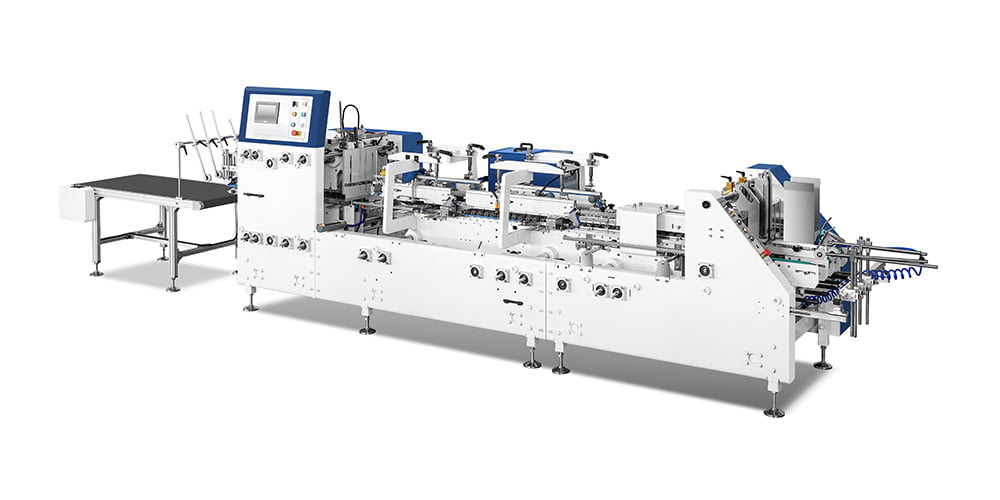
How Does Folder Gluer Equipment Respond to Changing Production Demands?
Folder Gluer Equipment does not operate in a fixed mode once production starts. It reacts continuously to what passes through it.
When material feels stiffer, folding resistance increases slightly, and pressure distribution adjusts through mechanical contact. When material feels smoother, feeding becomes easier, and alignment relies more on roller guidance.
Glue behavior also shifts depending on surface type. On porous material, adhesive spreads quickly. On coated surfaces, it stays near the surface longer before bonding develops.
In actual operation, response often appears as:
- small changes in folding pressure during run
- natural correction of feeding movement
- glue spread adjusting to surface condition
- alignment stabilizing through roller contact
- steady balance between resistance and flow
Folder Gluer Factory environments usually focus on keeping these small reactions stable rather than trying to eliminate them completely.
What Challenges Appear in Long Continuous Folding Cycles?
When the machine runs for long periods, small differences slowly start to appear. Nothing breaks, nothing stops, yet the output may not feel exactly the same from start to end.
One common change is alignment drift. It does not happen suddenly. It builds gradually as feeding conditions and material response shift slightly over time.
Glue behavior can also vary during long cycles. Even when application stays consistent, different sheet surfaces react in slightly different ways, changing how bonding develops.
Typical patterns during long runs include:
- folding resistance slowly shifting
- minor alignment movement during feeding
- glue timing feeling slightly different across cycles
- pressure response changing with material flow
- output shape becoming less uniform in small ways
These are not faults. They are part of how continuous systems interact with changing material conditions.
How Does Folding Accuracy Remain Stable Across Different Materials?
Accuracy in folding is less about one setting and more about how material and machine stay in balance.
Pre-creased lines help guide folding direction, especially when material stiffness changes. Without clear crease guidance, folding depends more on machine force, which can introduce small variation.
Surface condition plays a role too. Smooth surfaces move easily but may need tighter control during alignment. Rough surfaces hold better position but resist folding slightly more.
In practice, stable folding usually comes from:
- clear crease direction before folding starts
- steady feeding without sudden shifts
- balanced pressure along folding path
- consistent roller contact during movement
- timing that stays aligned across stages
When these stay steady, folding remains more predictable even when materials change.
| Material Type | Folding Feel | Glue Interaction | Running Behavior |
|---|---|---|---|
| Plain Paper | Light and flexible | Moderate absorption | Steady movement |
| Corrugated Board | Layered resistance | Uneven spread | Pressure sensitive |
| Coated Paper | Smooth sliding | Slower bonding start | Alignment sensitive |
| Laminated Sheet | Surface-driven fold | Limited penetration | Contact dependent |
| Mixed Materials | Changing response | Variable behavior | Adjustment needed |
How Does Automatic Folder Gluer Maintain Balance Between Movement and Stability?
Continuous packaging is always a balance that shifts slightly during operation.
If movement becomes too fast, alignment may drift. If pressure becomes too strong, folding loses flexibility. The system stays somewhere between these two conditions most of the time.
An Automatic Folder Gluer keeps this balance through constant interaction between feeding, folding, and gluing sections. Nothing works alone; each part influences the next.
In real operation, balance is usually seen as:
- smooth handover between feeding and folding
- steady pressure across folding channels
- consistent glue contact during movement
- stable guiding through roller sections
- small corrections during resistance changes
Folder Gluer Equipment performs more steadily when this balance is naturally maintained rather than constantly adjusted.
What Role Does Folder Gluer Factory Environment Play in Continuous Production?
In many cases, production stability is not only related to the machine itself. The surrounding environment inside a Folder Gluer Factory also plays a quiet role in how materials behave once they enter the line.
Paper stored in different conditions rarely feels exactly the same. Some stacks feel slightly softer when handled, while others feel a bit tighter or more rigid. These differences are not always visible, yet they show up once feeding begins.
Air condition around the working area also affects behavior in a slow and indirect way. When air feels drier, sheets may become slightly stiffer. When humidity rises, bending feels easier, though sometimes less stable after folding.
During long operation periods, these small changes can lead to subtle shifts such as:
- feeding feeling slightly different from early run to later run
- glue response changing across working hours
- folding lines shifting a little depending on storage condition
- sheet surface feel changing during continuous movement
- alignment needing small correction from time to time
Nothing here happens suddenly. It builds gradually, almost without notice, until output consistency starts to feel slightly different.
How Does Glue Behavior Influence Continuous Output Stability?
Glue is often treated as a simple part of the process, though in continuous production it behaves in a more sensitive way than expected.
On porous materials, adhesive spreads quickly and starts bonding early. On coated or laminated surfaces, glue tends to stay on top longer before any real bonding begins. That difference changes how folding feels during operation, even when machine settings stay unchanged.
Sometimes glue appears to react faster in one batch and slower in another. It is not only about the adhesive itself, but also how surface condition and pressure timing interact at that moment.
In real production, glue behavior often shows patterns like:
- spreading faster on raw paper surfaces
- staying longer on smooth or coated sheets
- bonding strength developing at different speeds
- uneven spread appearing on mixed surfaces
- sensitivity increasing when pressure is not balanced
Inside an Automatic Folder Gluer, glue does not act alone. It always reacts together with folding pressure and sheet movement.
How Does Automatic Folder Gluer Handle Mixed Production Flow?
Mixed material flow is more common than it seems in continuous packaging work. Even when materials look similar, small differences in coating, stiffness, or fiber direction can change how they behave once inside the machine.
The machine itself does not stop between changes. Sheets keep moving through the same path, and adjustment happens through mechanical response rather than manual reset.
What usually appears during mixed flow is not sudden instability, but small shifts such as:
- one sheet folds smoothly, next sheet feels slightly tighter
- glue timing changes without clear reason
- alignment shifts during transition between batches
- feeding tension varies across stacks
- folding response feels different even under same settings
Over time, operators often recognize these differences not through measurement, but through sound, movement, and sheet feel during operation.
Folder Gluer Equipment handles this by maintaining continuous contact and pressure balance, rather than trying to isolate each variation.
How Does Long-Term Operation Affect System Stability?
When operation continues for long periods, small changes slowly accumulate. Even if the machine runs without interruption, material behavior and mechanical response do not stay completely constant.
One of the first signs is slight drift in alignment. It does not appear suddenly. It builds little by little as feeding, pressure, and surface conditions shift during continuous cycles.
Glue behavior may also change slightly over time. Even with steady application, different surface conditions and pressure timing create variation in how bonding develops.
In long running cycles, typical observations include:
- folding resistance gradually shifting
- minor alignment changes during feeding
- glue contact timing feeling less uniform
- pressure response changing across cycles
- final output showing small variation in shape consistency
These changes are usually part of continuous operation behavior rather than a fault in equipment.
How Do Operators Support Continuous Packaging Flow?
Even with stable equipment, operator attention still plays a quiet role in keeping production steady. Most adjustments are small and based on observation rather than large changes.
Instead of stopping the system, adjustments are often made during operation. Small corrections in feeding, pressure balance, or alignment help keep flow stable without breaking rhythm.
In daily work, operator influence often appears through:
- watching feeding consistency across stacks
- adjusting alignment when slight drift appears
- checking glue spread behavior during long runs
- balancing pressure when material changes
- responding to small shifts in folding feel
Over time, experience becomes more about recognizing patterns in material movement than making large machine changes.
How Does Automatic Folder Gluer Maintain Balance Between Speed and Stability?
Speed and stability rarely move in the same direction. When movement becomes faster, alignment can become more sensitive. When pressure increases, folding may feel less flexible.
An Automatic Folder Gluer works within this balance continuously. It does not lock into one condition. Instead, it stays in a working range where feeding, folding, and gluing remain connected.
In real operation, this balance is usually seen as:
- steady transfer between feeding and folding zones
- controlled pressure across contact points
- consistent glue interaction during movement
- stable sheet guidance through roller paths
- small automatic correction during resistance change
Folder Gluer Equipment performs more consistently when this balance remains naturally steady during long runs.
How Does Packaging Line Coordination Affect Continuous Output?
An Automatic Folder Gluer does not work alone. It sits inside a wider production line where feeding preparation, folding process, and downstream handling all connect.
If upstream feeding is uneven, folding will feel the effect immediately. If downstream handling is inconsistent, stacking may show variation even when folding itself remains stable.
This coordination often appears through:
- timing between sheet preparation and feeding
- alignment between feeding and folding sections
- glue application matching folding movement
- output transfer staying smooth without interruption
- continuous flow across connected stages
In Folder Gluer Factory environments, attention is often placed on how these stages work together rather than focusing on one point alone.
What Patterns Emerge in Continuous Folding and Gluing Operations?
Over time, continuous operation reveals repeating patterns that are not always obvious at the beginning.
Material response slowly adapts to machine movement. Machine response also adjusts slightly based on material behavior. This interaction creates a kind of rhythm inside the system.
Common patterns include:
- gradual adjustment between material stiffness and machine pressure
- slow change in feeding feel across long cycles
- small variation in glue behavior depending on surface condition
- repeated alignment corrections during continuous flow
- steady interaction between movement and resistance
These patterns are part of normal operation in continuous packaging systems rather than irregular behavior.
Recommended Products
Focus on providing high-quality folder-gluing equipment to customers around the world.



No.3888, Jiangnan Avenue, Nanbin Street, Ruian City, Wenzhou City, Zhejiang Province, China







Privacy Policy Copyright © Zhejiang Chengwang Intelligent Packaging Equipment Co., Ltd.
High Speed Folder Gluer Factory