English
 русский
 Français
 Español
 Deutsch
How To Improve Stability Of Paper Box Folder Gluer When Material Thickness Changes
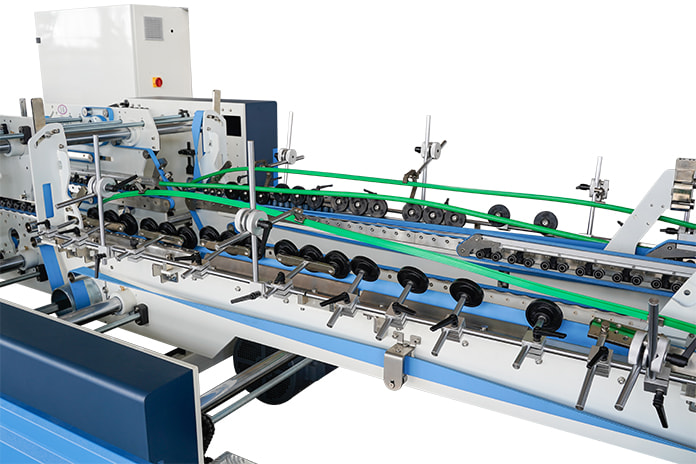
Why Does Material Thickness Affect the Stability of a Paper Box Folder Gluer
A Paper Box Folder Gluer expects a certain range of material thickness. The machine sets up with gaps, pressures, and alignments based on that expectation. When the material thickness changes, those settings no longer match the new stock.
Thinner material moves through the machine differently than thicker material. A thin paperboard flexes more easily. It may buckle in the folding section. A thick paperboard resists bending. It may crack along the fold line. The machine struggles to handle both extremes with the same settings.
The glue application suffers from thickness changes as well. The gap between the glue wheel and the material determines how much adhesive applies. Too large a gap for thin material leaves dry spots. Too small a gap for thick material causes glue squeeze out onto machine surfaces.
Jamming happens when material thickness exceeds the fixed clearances. A Paper Box Folder Gluer has fixed openings in several sections. The feed section has a height limit. The folding belts have a fixed separation. A material that exceeds these limits stops moving entirely.
The following table shows common stability problems and their causes when material thickness changes:
| Stability Problem | Thin Material Cause | Thick Material Cause |
|---|---|---|
| Fold Misalignment | Material shifts between belts | Belts cannot bend thick stock enough |
| Glue Skipping | Glue wheel does not contact surface | Glue gap too small for thick stock |
| Jamming | No issue | Material exceeds fixed clearances |
| Twisted Boxes | Uneven belt pressure distorts thin stock | Fold plates push thick stock crooked |
| Slippage | Feed belts lack grip on light material | Conveyor pressure insufficient for heavy stock |
A Folder Gluer Factory designs machines with adjustment points to handle different material thicknesses. Those adjustments must be used correctly. An operator who skips adjustments invites instability into the production line.
What Happens to Folding Accuracy When Thickness Varies
The folding section relies on precise material positioning. Belts carry the paperboard through folding plates and folding rails. The material bends around fixed points. The bend point location changes with material thickness.
A thin material bends at a sharp point. The material folds cleanly along a narrow line. A thick material needs a larger radius bend. The fold spreads across a wider area. The folding plates designed for thin material may break or crack thick stock.
The folding belts apply pressure to keep the material moving through the bend. That pressure works well for one thickness. For thinner material, the same pressure may be too high. The belts crush the board edges. For thicker material, the pressure may be too low. The belts slip and lose control of the material.
Fold alignment depends on the material reaching the folding point at the correct angle. Side guides position the material before folding. A guide set for thin material allows too much movement for thick material. The thick material wobbles side to side before reaching the fold plates.
The result of inaccurate folding shows up at the end of the machine. Boxes come out with overlapping panels that do not meet. The glue misses the intended landing area. A box that should close flat instead springs open at the seam.
How to Adjust the Feeding Section for Different Material Thicknesses
The feeding section starts the entire process. A stable feed prevents problems later in the machine. The first adjustment point is the feed roller gap. The gap should be slightly less than the material thickness. The roller grips the material without crushing it.
A simple test confirms correct roller gap. A single sheet of material feeds into the rollers by hand with the machine off. The sheet should move with light resistance. Too much resistance means the gap is too small. No resistance means the gap is too large.
Feed belt tension matters for consistent movement. Thin material needs lower belt tension. High tension stretches thin material out of shape. Thick material needs higher tension to overcome the weight of the stock. The belts must grip firmly without leaving marks on the board surface.
Side guides position the material as it enters the feed section. Guides set too close bind on thick material. The material jams at the entrance. Guides set too far allow thin material to shift sideways. The material enters the machine crooked.
Key adjustments for the feeding section include:
- Roller gap set to material thickness minus a small margin
- Belt tension adjusted until material moves without slipping
- Side guides set to material width plus a small clearance
- Feed speed reduced when switching to heavier stock
- Stack height limited to prevent weight from distorting bottom sheets
A Folder Gluer Factory often provides reference charts for feed settings. The chart shows starting points for common material thicknesses. An operator uses the chart as a baseline and fine tunes from there.
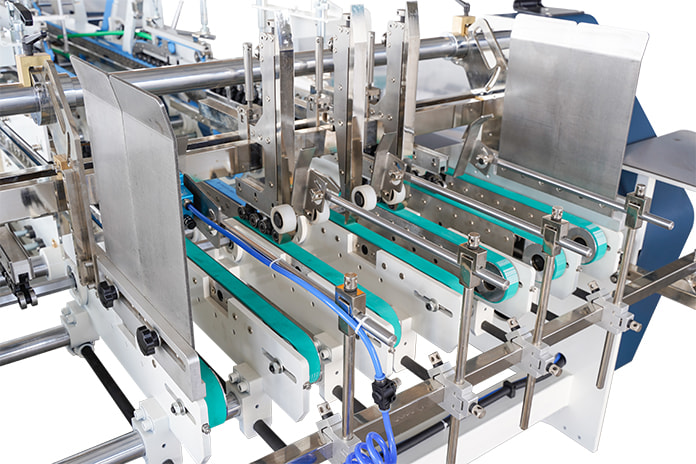
How Do Folding Belts Adjust to Thicker or Thinner Stock
Folding belts run in pairs. An upper belt and a lower belt pinch the material between them. The pinching force comes from belt tension and from spring loaded pressure rollers. That force must match the material thickness.
Thin material needs light pressure. Heavy pressure causes the belts to leave marks on the board surface. The marks show as shiny lines or compressed areas where the board thickness reduced. A customer may reject boxes with belt marks.
Thick material needs higher pressure. The weight and stiffness of the stock push back against the belts. Without enough pressure, the belts slip. The material stops moving or moves intermittently. The glue dries before the material reaches the folding section.
Belt speed synchronization matters across different thicknesses. The upper and lower belts must move at exactly the same speed. A speed difference causes the material to twist or curl. Twisted material fails to fold correctly.
The belt material itself affects grip on different stocks. A smooth belt works well for coated paperboard. A textured belt grips uncoated or recycled board better. An operator may change belt types when switching between very different material thicknesses.
What Glue Gap Setting Works for Thin Versus Thick Stock
The glue applicator transfers adhesive from a wheel or nozzle to the material surface. The gap between the applicator and the material determines how much glue transfers. A gap that works for one thickness fails for another.
Setting the gap correctly starts with knowing the material thickness. The glue wheel should contact the material surface with light pressure. Too much pressure deforms the wheel or crushes the board. Too little pressure leaves gaps in the glue pattern.
A feeler gauge helps set the gap accurately. The gauge slides between the glue wheel and the material at rest. A slight drag on the gauge indicates proper contact. No drag means the wheel does not touch the material.
Glue pattern width also needs adjustment for different thicknesses. Thin material spreads glue across a wider area under the same wheel pressure. Thick material concentrates the glue in a narrower band. The glue pattern should cover the intended landing area without spreading beyond it.
Problems from incorrect glue gap include:
- Starved glue lines from too large a gap
- Glue squeeze out from too small a gap
- Uneven glue distribution from inconsistent gap across the wheel width
- Glue buildup on machine parts from excessive application
- Missed glue targets from misaligned wheel position
The glue viscosity interacts with gap setting. A thin glue runs easily and needs a smaller gap. A thick glue needs a larger gap to flow properly. An operator changing material thickness may also need to change glue type or viscosity.
Why Does Conveyor Pressure Need Adjustment for Thick Paperboard
The conveyor section moves folded boxes toward the glue drying area. An upper conveyor presses down on the boxes. A lower conveyor supports them from below. The pressure between these two conveyors keeps the box panels together while the glue sets.
Thick paperboard resists compression. The material has internal stiffness. A conveyor pressure that works for thin material does not press thick panels together firmly. The glued seam may not make full contact. The box opens after leaving the machine.
Thin material compresses easily. The same pressure that works for thick material crushes thin board. The crushed areas show as flat spots or indentations on the finished box. The box structure weakens at those points.
A Paper Box Folder Gluer with adjustable conveyor pressure handles both situations. A hand wheel or electric actuator raises or lowers the upper conveyor. The operator changes the pressure based on material thickness.
A simple test confirms correct conveyor pressure. A finished box emerges from the machine. The operator tries to pull apart the glued seam by hand. The seam should hold firmly without separating. The box panels should show no crushing marks from the conveyor.
How to Maintain Squareness When Material Thickness Changes
Squareness means all corners of the box meet at ninety degree angles. A box that is not square looks twisted. The sides do not align. The box does not close flat.
Material thickness affects squareness through the folding process. A thick material pushes against folding plates with more force. The plates may flex slightly under that force. The fold line shifts position. The resulting box comes out skewed.
Thin material behaves differently. The material flexes rather than pushing against the plates. The folding plates may overfold a thin board. The panel goes past the intended fold angle. The box springs back to an open shape.
Side register refers to keeping the material aligned with the machine centerline. A register system with guide rails or belts positions the material before folding. Those guides need adjustment when thickness changes.
The adjustment sequence for maintaining squareness:
- Center the material on the infeed table before starting
- Set side guides to material width with a small clearance
- Check fold alignment after the first few boxes
- Adjust folding plate positions in small increments
- Verify squareness with a try square on finished boxes
A Folder Gluer Factory designs folding plates with adjustment slots. The plates move forward or backward to change the fold point. They move side to side to center the fold line. A scale on the adjustment mechanism helps operators return to previous settings.
What Operator Training Improves Handling of Material Variations
A machine with all the adjustments in the world performs poorly without a trained operator. The operator decides when and how much to adjust. Good training makes the difference between stable production and constant problems.
Training starts with understanding how a Paper Box Folder Gluer works. An operator learns the path of the material through each section. The operator sees what happens inside the machine when settings are wrong. A machine with clear guard windows helps with this learning.
The next training step covers adjustment points. An operator learns which knob or wheel controls each function. The operator practices making adjustments on running material. Small changes taught first. Large changes come with experience.
Documentation supports good operation. A simple chart lists starting settings for common material thicknesses. The chart hangs near the machine for quick reference. An operator uses the chart as a starting point and fine tunes from there.
A Folder Gluer Factory often provides training materials. Manuals, videos, and onsite instruction help operators learn quickly. A factory representative demonstrates adjustments during machine installation. The operator practices under supervision.
Signs of poor stability that operators learn to recognize:
- Glue misses the intended landing area
- Folded panels do not meet evenly
- Boxes stick together in the conveyor
- Material stops moving for no apparent reason
- Glue builds up on machine surfaces
An operator who recognizes these signs early stops the machine and makes corrections. Waiting until the end of the run means many bad boxes already produced.
How to Reduce Changeover Time When Switching Material Thickness
Changeover time is the period when the machine stops for adjustments. Short changeover times mean more production hours. Long changeover times waste valuable machine capacity.
Preset positions speed up changeovers. An operator measures and records the settings that work for each material thickness. A notebook or digital file holds these records. The next time the same material runs, the operator dials in the previous settings.
Color coding helps operators find adjustment points quickly. A red knob controls feed roller gap. A blue knob controls conveyor pressure. The operator looks for the colored knob instead of searching.
The sequence of adjustments follows a logical order. Feed section first. Then glue application. Then folding section. Then conveyor pressure. Doing adjustments in the same order every time prevents missed steps.
Tools kept nearby reduce wasted movement. A wrench for adjusting folding plates stays at the machine. A feeler gauge for checking glue gap stays in a holder on the machine frame. The operator does not walk to a tool cabinet for every adjustment.
A modern Paper Box Folder Gluer may have digital position readouts. The operator types in a material thickness value. Motors move the adjustments to the correct positions. The operator verifies the settings and starts production.
Why Does Machine Calibration Affect Stability Across Thickness Ranges
Calibration ensures that the machine adjustments respond correctly. A knob that controls feed roller gap should produce a known change in gap size. A pressure gauge should read accurately. Calibration confirms these relationships.
A machine loses calibration over time. Belts stretch. Springs weaken. Sensors drift. A Paper Box Folder Gluer that ran perfectly a year ago may run poorly today even with the same material.
Regular calibration checks catch problems early. The operator measures actual gap sizes and compares them to the settings. A gap that does not match the setting needs adjustment. The machine manual describes the calibration procedure.
Critical calibration points include:
- Feed roller gap versus scale reading
- Glue wheel gap versus material thickness
- Conveyor pressure versus gauge reading
- Side guide position versus scale marking
- Belt tension versus spring compression
A Folder Gluer Factory provides calibration procedures in the machine manual. The factory may also offer calibration service visits. A technician travels to the customer site and checks every adjustment point.
A well calibrated machine handles material thickness changes more gracefully. The operator turns a knob to a known position. The adjustment responds as expected. The machine produces good boxes sooner after each changeover.
What Upgrades Improve a Paper Box Folder Gluer for Variable Thickness Work
Older machines have manual adjustments. The operator turns hand wheels and measures gaps with physical tools. Newer machines offer upgrades that simplify the process.
Automatic gap adjustment systems measure material thickness with sensors. The machine reads the thickness of the first sheet. Motors move the feed rollers, glue applicator, and folding belts to match. The operator confirms the settings and starts the run.
Pressure sensors on conveyors show exact force applied to the material. A digital display reads in consistent units. The operator sets a target pressure for each material thickness. The machine maintains that pressure automatically.
A camera system watches the folding process. The camera detects fold misalignment within seconds. The operator sees the problem on a screen and makes corrections. Some camera systems integrate with adjustment motors for automatic correction.
Upgrades to consider for a Paper Box Folder Gluer:
- Digital readouts on all adjustment points
- Motorized adjustments with preset memory
- Thickness sensor at the feed section
- Pressure sensors on upper conveyor
- Camera monitoring of fold quality
A Folder Gluer Factory can recommend upgrades based on the specific production needs. A factory that produces the same few material thicknesses may not need many upgrades. A factory that runs a wide variety of materials benefits from automation.
The investment in upgrades pays back through reduced waste and shorter changeover times. Less material thrown away because of setup errors. More production hours because adjustments happen faster.
Recommended Products
Focus on providing high-quality folder-gluing equipment to customers around the world.



No.3888, Jiangnan Avenue, Nanbin Street, Ruian City, Wenzhou City, Zhejiang Province, China







Privacy Policy Copyright © Zhejiang Chengwang Intelligent Packaging Equipment Co., Ltd.
High Speed Folder Gluer Factory